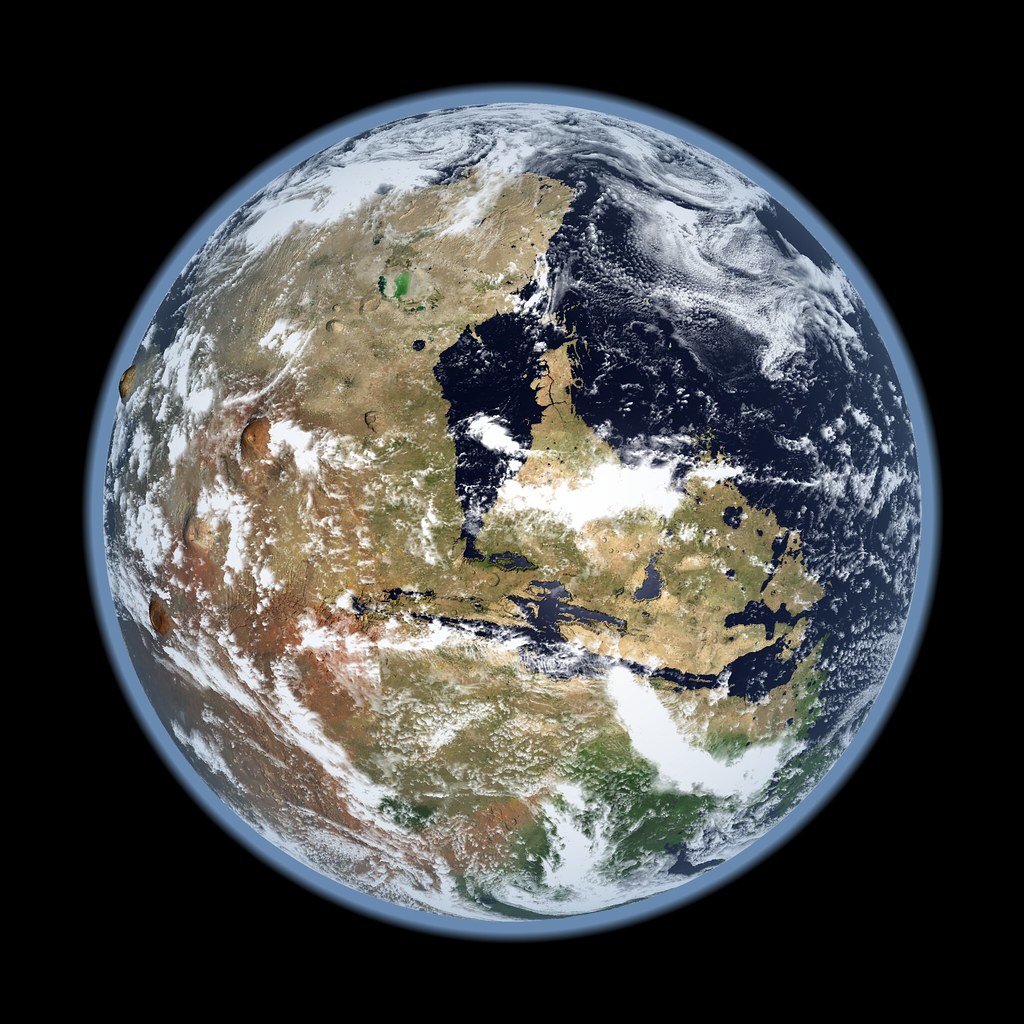
Olympus Mons height is a subject of great interest among scientists and astronomy enthusiasts. This colossal Martian volcano raises questions about its status as the tallest mountain in the Solar System.
What is Olympus Mons?
Olympus Mons is a colossal shield volcano located on Mars, renowned for its staggering height and vast size. It is often hailed as the tallest planetary mountain in the Solar System, reaching an impressive elevation of approximately 13.6 miles (22 kilometers) above the Martian surface. This makes Olympus Mons nearly three times taller than Mount Everest, the highest peak on Earth.
The mountain spans about 370 miles (600 kilometers) in diameter, making it roughly equivalent to the size of the state of Arizona. Its gentle slopes and broad base are characteristic of shield volcanoes, formed by the eruption of low-viscosity lava that can flow over great distances. The summit of Olympus Mons features a large caldera, which is a depression formed after the volcano’s last eruption. Understanding the height and structure of Olympus Mons provides valuable insights into the geological history of Mars and the processes that shaped its landscape.
How tall is Olympus Mons compared to Earth mountains?
Olympus Mons stands out not only as a prominent feature on Mars but also as the tallest planetary mountain in the entire solar system. With a height of approximately 13.6 miles (22 kilometers), it dwarfs Earth’s tallest peak, Mount Everest, which reaches a mere 5.5 miles (8.8 kilometers) above sea level. To put this into perspective, Olympus Mons is nearly three times taller than Everest.
In fact, the height of Olympus Mons is so significant that:
- It could easily contain the entire state of New Mexico within its base.
- The summit caldera measures about 50 miles (80 kilometers) wide.
- Its slopes are gentle, averaging only about 5 degrees, making it less steep than many Earth volcanoes.
Understanding the height of Olympus Mons provides valuable insights into the geological history of Mars and its potential for past volcanic activity.
The geology of Olympus Mons
The geology of Olympus Mons reveals a fascinating history of volcanic activity and unique formations. This colossal shield volcano, with a height of approximately 13.6 miles (22 kilometers), stands as a testament to the geological processes that have shaped Mars. The mountain’s gentle slopes, which can extend over 370 miles (600 kilometers) in diameter, are primarily composed of basaltic lava flows that have solidified over millions of years.
Interestingly, the flanks of Olympus Mons exhibit a variety of features, including lava tubes and calderas created by explosive eruptions. The large caldera at the summit consists of several overlapping craters, suggesting a complex volcanic history. This geological diversity not only highlights the mountain’s immense height but also its significance in understanding the volcanic processes that occur on other planets.
As scientists continue to study the Olympus Mons height and its geological formations, they gain insights into the broader dynamics of planetary evolution.
Why is Olympus Mons significant?
Olympus Mons holds a unique place in both astronomical studies and the public imagination. As the highest mountain in space, it stands as a testament to the geological processes of Mars. Its height, which is approximately 13.6 miles (22 kilometers), is nearly three times that of Mount Everest, making it a focal point for scientists interested in planetary formations.
Moreover, the sheer size of Olympus Mons raises intriguing questions about volcanic activity and the history of Mars. The shield volcano’s massive caldera and extensive lava flows suggest a long period of eruptions, giving researchers insights into the planet’s past climate and potential for life.
Additionally, understanding the height of Olympus Mons could help scientists draw comparisons between Martian and terrestrial geology. This knowledge not only enhances our understanding of Mars but also provides valuable insights into the processes that shape other celestial bodies throughout the solar system.
Exploration of Mars and Olympus Mons
The exploration of Mars has revealed fascinating insights into its geological features, particularly Olympus Mons. This colossal shield volcano, with its impressive height, stands as a testament to the planet’s volcanic activity.
Numerous missions have contributed to our understanding of this giant mountain, including orbiters and rovers. The data collected has shown that Olympus Mons reaches a staggering height of about 22 kilometers, making it the highest mountain in space.
Scientists are particularly interested in how such height could be achieved. Factors like Mars’ lower gravity and lack of tectonic plate movement allow volcanoes to grow larger than those on Earth.
Exploring Olympus Mons not only enhances our knowledge of Martian geology but also offers clues about the planet’s past and its potential for future exploration.
- Mars Reconnaissance Orbiter
- Curiosity Rover
- Perseverance Rover
These missions continue to unveil the mysteries surrounding Olympus Mons height and its significance in the solar system.
Future research on Mars’ tallest volcano
Future research on Mars’ tallest volcano, Olympus Mons, is set to expand our understanding of its immense height and geological history. Scientists are eager to explore various aspects of this colossal shield volcano, which stands at approximately 13.6 miles (22 kilometers) high, making it the real highest mountain in space.
Upcoming missions aim to utilize advanced technologies to gather data on Olympus Mons’ structure and composition. This research will focus on:
- The formation processes that contributed to its towering height.
- The volcanic activity that shaped its landscape over millions of years.
- The potential for past climates and environments that may have existed around the volcano.
Understanding Olympus Mons height and its geological features will not only enhance our knowledge of Mars but also provide insights into volcanic activity throughout the solar system. The findings could have profound implications for future exploration and the search for past life on the Red Planet.
The Olympus Mons height is a staggering 13.6 miles, making it nearly three times taller than Mount Everest. Scientists continue to study the Olympus Mons height to understand the geological processes that allowed such a colossal structure to form on Mars.
By Kevin M. Gill via Openverse